
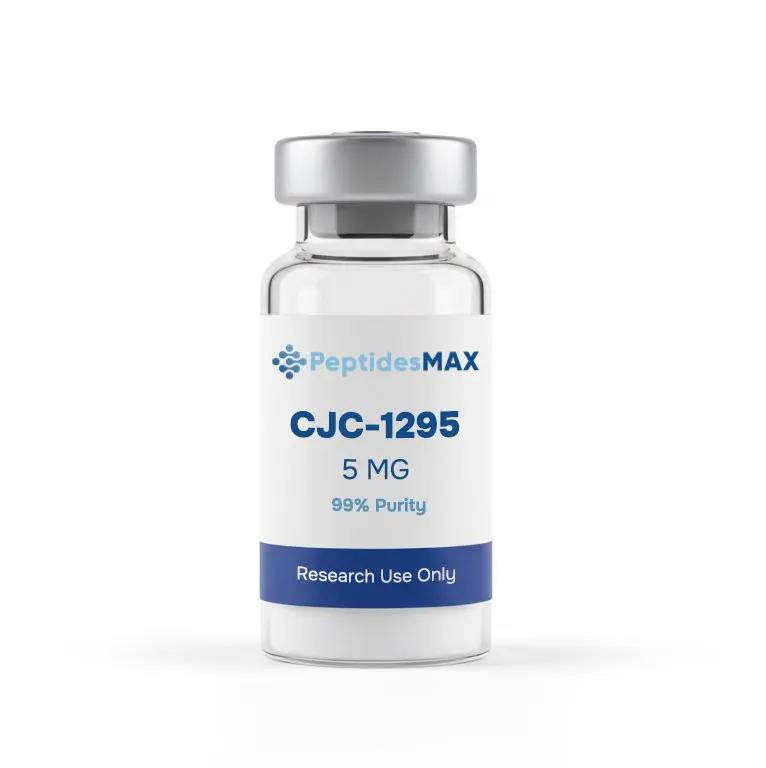
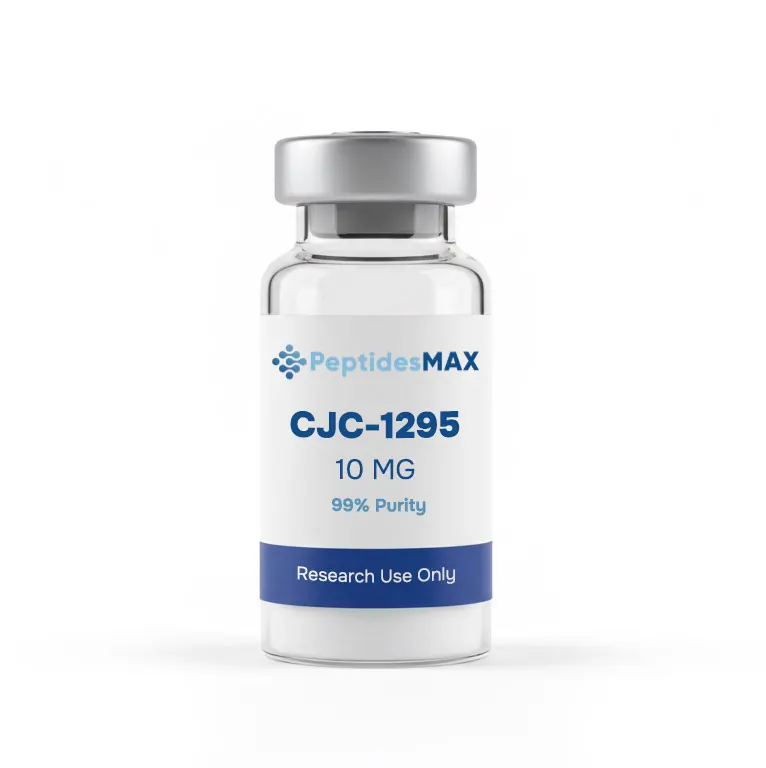
CJC-1295 DAC Research Peptide – Long-Acting Growth Hormone Releasing Hormone Analog
Product Overview:
CJC-1295 DAC (Drug Affinity Complex) is a long-acting synthetic analog of growth hormone-releasing hormone (GHRH). This modified peptide contains a lysine derivative (DAC) that significantly extends its half-life by binding to albumin in the bloodstream, allowing for sustained GH release over an extended period. Unlike CJC-1295 without DAC, this formulation provides prolonged stimulation of the pituitary gland, making it valuable for long-term growth hormone secretion studies. Our CJC-1295 DAC is synthesized for advanced endocrine and metabolic research with pharmaceutical-grade purity.
Key Features:
- High Purity: ≥99% purity verified by HPLC-MS analysis
- Available Concentrations: 2mg, 5mg, and 10mg lyophilized powder vials
- Research Grade: Manufactured in ISO-certified facility under strict quality control
- Long-Acting Formulation: DAC modification extends half-life for sustained research applications
- Stable Formulation: Lyophilized powder ensures maximum potency and extended shelf life
Chemical Information:
- Molecular Formula: C₁₅₂H₂₅₂N₄₄O₄₂ (plus DAC modification)
- Molecular Weight: ~3,647.9 g/mol (including DAC component)
- Sequence: 29-amino acid GHRH analog with N-terminal DAC modification
- DAC Component: N-epsilon-maleimidopropionic acid-lysine derivative
- Appearance: White to off-white lyophilized powder
- Solubility: Soluble in sterile water, physiological saline, or bacteriostatic water
Research Applications:
CJC-1295 DAC is primarily investigated for its sustained GH-releasing effects:
- Growth Hormone Secretion: Long-term stimulation of natural GH release patterns
- Metabolic Research: Studies on lipid metabolism, insulin sensitivity, and body composition over extended periods
- Muscle Growth: Investigation of sustained anabolic effects and muscle hypertrophy
- Aging Research: Long-term studies on age-related GH decline and its physiological impacts
- Recovery Research: Extended tissue repair and recovery processes
- Protein Synthesis: Sustained effects on muscle protein synthesis and nitrogen retention
- IGF-1 Production: Long-term stimulation of insulin-like growth factor-1 synthesis
Important: This product is strictly for in vitro and research use only. Not intended for human consumption, therapeutic application, or veterinary use.
Mechanism of Action:
CJC-1295 DAC binds to growth hormone-releasing hormone receptors (GHRHR) in the pituitary gland, stimulating GH synthesis and release. The DAC (Drug Affinity Complex) component, a lysine derivative, binds covalently to albumin in circulation, significantly extending the peptide’s half-life from minutes to days. This long-acting profile provides sustained GH elevation over 6-8 days in research models, making it suitable for studying chronic GH effects without frequent administration.
Storage & Handling:
- Store lyophilized powder at -20°C (stable for up to 24 months)
- Reconstituted solution: stable for 14 days at 2-8°C; for longer storage, freeze at -80°C
- Protect from light and moisture at all times
- Avoid repeated freeze-thaw cycles to maintain peptide integrity
- Use sterile technique for all reconstitution and handling procedures
Safety Disclaimer:
This peptide is a research chemical only. It has not been evaluated by the FDA, EMA, or any regulatory authority for safety, efficacy, or pharmacological effects. Researchers must adhere to all institutional and national safety guidelines when handling. The buyer assumes full responsibility for compliance with applicable laws and regulations regarding research compounds. Not for human or veterinary therapeutic use.
Reconstitution Guidelines:
- Reconstitute with sterile bacteriostatic water or sterile water for injection
- Recommended concentration: 1-2 mg/mL depending on research protocol
- Gently swirl vial; avoid vigorous shaking to prevent denaturation
- Allow powder to fully dissolve (may take 1-2 minutes)
- Store reconstituted solution in sterile, sealed vial
Note: Certificate of Analysis (CoA) available upon request. Bulk quantities available for institutional research groups. Contact support for wholesale pricing or protocol-specific consultations.
Related Products
Recently Viewed

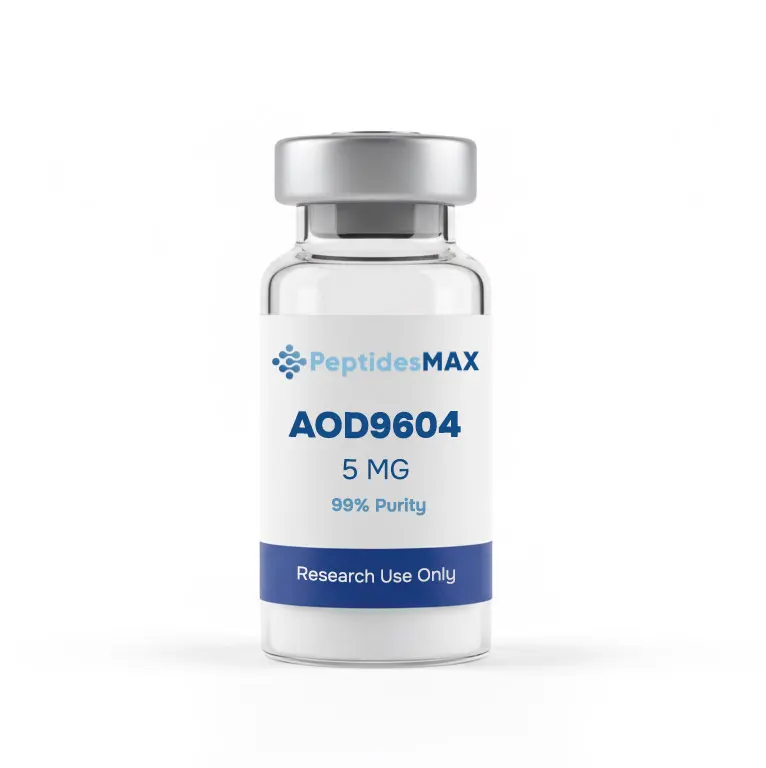
AOD9604 5MG
95,00 $
Bacteriostatic Water 10ML
Price range: 10,00 $ through 15,00 $
BPC-157 10MG
95,00 $
BPC-157/TB500 Blend 10MG
90,00 $
BPC-157/TB500 Blend 20MG
170,00 $

Reviews
There are no reviews yet.