
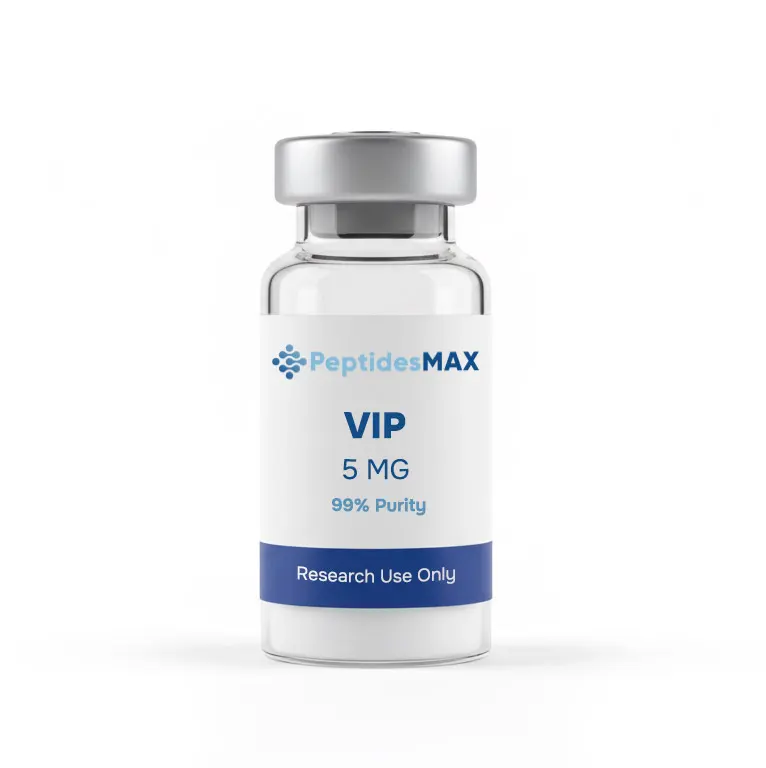
VIP (Vasoactive Intestinal Peptide) Research Peptide – 5mg/10mg Immune & Neurological Studies
Product Overview:
VIP (Vasoactive Intestinal Peptide) is a 28-amino acid neuropeptide that functions as a potent vasodilator, immunomodulator, and neurotransmitter. Originally discovered in the intestinal tract, VIP is now recognized for its widespread distribution throughout the central and peripheral nervous systems. This peptide plays critical roles in immune regulation, neuroprotection, circadian rhythm modulation, and inflammatory responses. Our VIP is synthesized for advanced immunological, neurological, and endocrine research with pharmaceutical-grade purity.
Key Features:
- High Purity: ≥99% purity verified by HPLC-MS analysis
- Available Concentrations: 5mg and 10mg lyophilized powder vials
- Research Grade: Manufactured in ISO-certified facility under strict quality control
- Stable Formulation: Lyophilized powder ensures maximum potency and extended shelf life
- Multi-System Research: Vasodilatory, immunomodulatory, and neuroprotective properties
Chemical Information:
- Molecular Formula: C₁₄₇H₂₃₈N₄₄O₄₂S
- Molecular Weight: ~3,326.7 g/mol
- Sequence: 28-amino acid neuropeptide (His-Ser-Asp-Ala-Val-Phe-Thr-Asp-Asn-Tyr-Thr-Arg-Leu-Arg-Lys-Gln-Met-Ala-Val-Lys-Lys-Tyr-Leu-Asn-Ser-Ile-Leu-Asn)
- Appearance: White to off-white lyophilized powder
- Solubility: Soluble in sterile water, physiological saline, or mild acidic buffers
Research Applications:
VIP has been extensively investigated for its diverse biological functions:
- Inflammatory Bowel Disease (IBD): Research on Crohn’s disease and ulcerative colitis; protection of intestinal barrier
- Autoimmune Diseases: Studies on rheumatoid arthritis, multiple sclerosis, and immune dysregulation
- Neurodegenerative Disorders: Research on Alzheimer’s, Parkinson’s, and ALS neuroprotection
- Respiratory Diseases: Investigation in asthma, COPD, and pulmonary hypertension
- Circadian Rhythm Studies: Regulation of sleep-wake cycles and biological clock synchronization
- Immune Modulation: Tolerance induction, Treg cell enhancement, and anti-inflammatory effects
- Cardiovascular Research: Vasodilation, cardiac function, and pulmonary vascular resistance
- Sepsis & Critical Care: Immune restoration in severe inflammatory states
Important: This product is strictly for in vitro and research use only. Not intended for human consumption, therapeutic application, or veterinary use.
Mechanism of Action:
VIP acts as a neuropeptide hormone that binds to VPAC1 and VPAC2 receptors (G protein-coupled receptors) throughout the body. It functions as a potent anti-inflammatory agent by inhibiting pro-inflammatory cytokines (TNF-α, IL-6, IL-12) while promoting anti-inflammatory IL-10. VIP also acts as a vasodilator through smooth muscle relaxation, regulates circadian rhythms via suprachiasmatic nucleus signaling, and provides neuroprotection through antioxidant and anti-apoptotic mechanisms.
Storage & Handling:
- Store lyophilized powder at -20°C (stable for up to 36 months)
- Reconstituted solution: stable for 7-14 days at 2-8°C; for longer storage, freeze at -80°C
- Highly sensitive to light and oxidation — protect from direct sunlight
- Avoid repeated freeze-thaw cycles to maintain peptide integrity
- Use sterile technique for all reconstitution and handling procedures
- Consider adding antioxidants (e.g., ascorbic acid) to solutions for enhanced stability
Safety Disclaimer:
This peptide is a research chemical only. It has not been evaluated by the FDA, EMA, or any regulatory authority for safety, efficacy, or pharmacological effects. Researchers must adhere to all institutional and national safety guidelines when handling. The buyer assumes full responsibility for compliance with applicable laws and regulations regarding research compounds. Not for human or veterinary therapeutic use.
Reconstitution Guidelines:
- Reconstitute with sterile bacteriostatic water or sterile water for injection
- Recommended concentration: 1-5 mg/mL depending on research protocol
- Gently swirl vial; avoid vigorous shaking to prevent oxidation
- Allow powder to fully dissolve (may take 2-3 minutes)
- Store reconstituted solution in sterile, light-protected vial
Note: Certificate of Analysis (CoA) available upon request. Bulk quantities available for institutional research groups. Contact support for wholesale pricing or protocol-specific consultations.
| Dosage |
10 MG ,5 MG |
|---|
Related Products
Recently Viewed

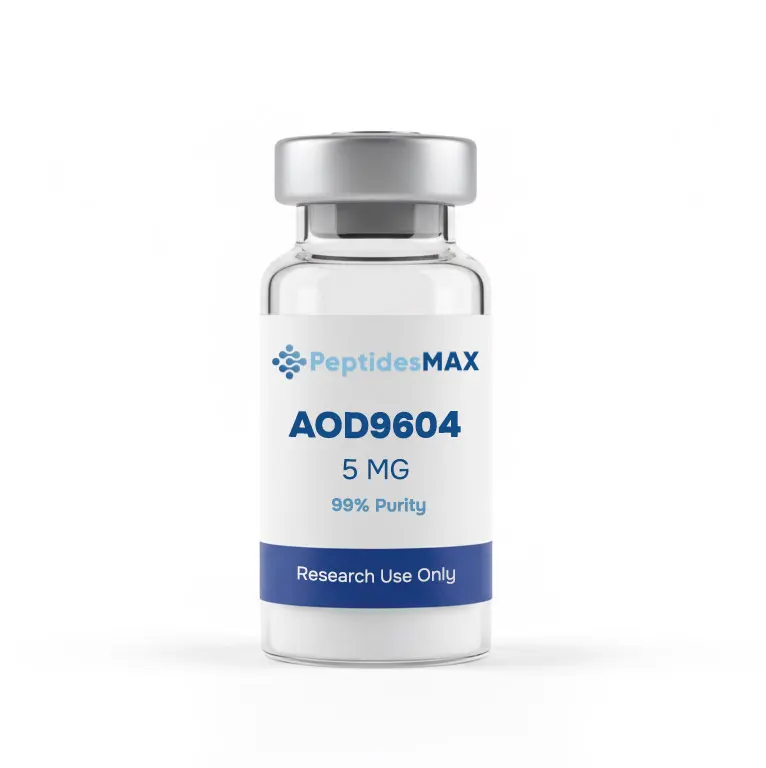
AOD9604 5MG
95,00 $
Bacteriostatic Water 10ML
Price range: 10,00 $ through 15,00 $
BPC-157 10MG
95,00 $
BPC-157/TB500 Blend 10MG
90,00 $
BPC-157/TB500 Blend 20MG
170,00 $

Reviews
There are no reviews yet.