
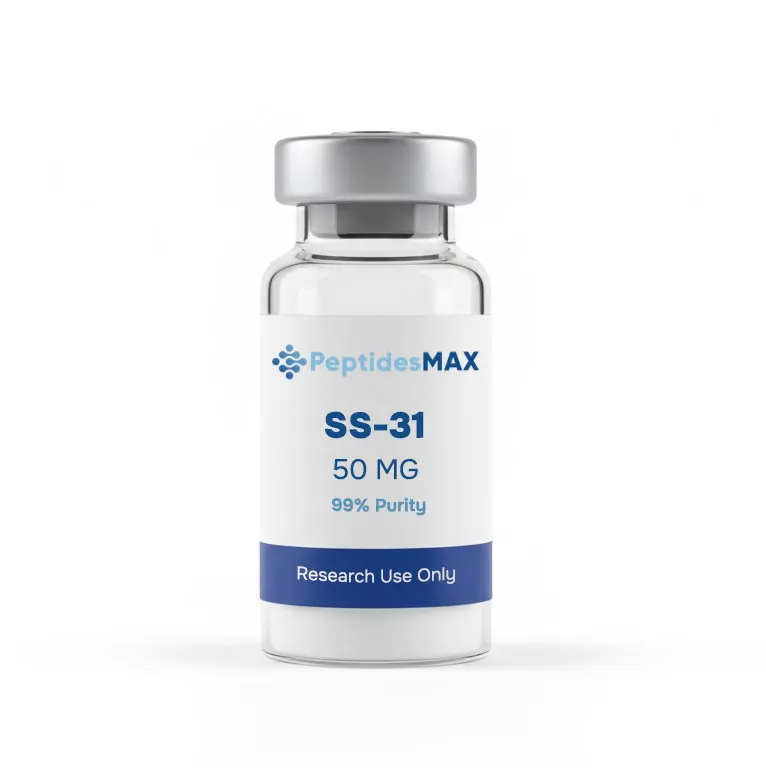
SS-31 (Elamipretide) Research Peptide – Mitochondrial Protection & Cellular Energy
Product Overview:
SS-31, also known as Elamipretide, is a novel mitochondria-targeted synthetic tetrapeptide that has revolutionized research into mitochondrial dysfunction and age-related diseases. This cell-permeable peptide selectively accumulates in mitochondria, where it binds to cardiolipin and stabilizes the mitochondrial inner membrane. SS-31 has been extensively studied for its potential in neurodegenerative diseases, cardiovascular conditions, and metabolic disorders. Our SS-31 is synthesized for advanced mitochondrial and cellular research with pharmaceutical-grade purity.
Key Features:
- High Purity: ≥98% purity verified by HPLC-MS analysis
- Available Concentration: 10mg lyophilized powder vials
- Research Grade: Manufactured in ISO-certified facility under strict quality control
- Stable Formulation: Lyophilized powder ensures maximum potency and extended shelf life
- Mitochondrial Targeting: Specifically designed for mitochondrial protection research
Chemical Information:
- Molecular Formula: C₃₂H₄₉N₉O₅
- Molecular Weight: ~639.8 g/mol
- Alternative Name: Elamipretide
- Structure: D-Arg-2′,6′-dimethyltyrosine-Lys-Phe-NH₂ (alternating D- and L- amino acids)
- Appearance: White to off-white lyophilized powder
- Solubility: Soluble in sterile water, physiological saline, or bacteriostatic water
Research Applications:
SS-31 has been extensively investigated for its unique mitochondrial protective effects:
- Mitochondrial Protection: Stabilizes mitochondrial inner membrane and prevents permeability transition pore opening
- Neurodegenerative Diseases: Research in Alzheimer’s, Parkinson’s, ALS, and Huntington’s disease models
- Cardiovascular Research: Protection against ischemia-reperfusion injury and heart failure
- Metabolic Disorders: Studies on diabetes, obesity, and metabolic syndrome
- Aging Research: Investigation into age-related mitochondrial dysfunction and cellular senescence
- Muscular Dystrophy: Research on mitochondrial myopathies and muscle wasting diseases
- Acute Kidney Injury: Protection against renal ischemia and nephrotoxicity
- Oxidative Stress: Reduction of reactive oxygen species (ROS) production in mitochondria
Important: This product is strictly for in vitro and research use only. Not intended for human consumption, therapeutic application, or veterinary use.
Mechanism of Action:
SS-31 selectively accumulates in mitochondria (100-5,000 fold concentration) due to its positive charge and lipophilic properties. It binds specifically to cardiolipin, a unique phospholipid in the mitochondrial inner membrane, preventing its oxidation and stabilizing the membrane structure. This action reduces electron leak from the respiratory chain, decreases ROS production, and prevents opening of the mitochondrial permeability transition pore (mPTP), which is critical for cell survival.
Storage & Handling:
- Store lyophilized powder at -20°C (stable for up to 36 months)
- Reconstituted solution: stable for 14 days at 2-8°C; for longer storage, freeze at -80°C
- Highly sensitive to light and heat — protect from direct sunlight at all times
- Avoid repeated freeze-thaw cycles to maintain peptide integrity
- Use sterile technique for all reconstitution and handling procedures
Safety Disclaimer:
This peptide is a research chemical only. It has not been evaluated by the FDA, EMA, or any regulatory authority for safety, efficacy, or pharmacological effects. Researchers must adhere to all institutional and national safety guidelines when handling. The buyer assumes full responsibility for compliance with applicable laws and regulations regarding research compounds. Not for human or veterinary therapeutic use.
Reconstitution Guidelines:
- Reconstitute with sterile bacteriostatic water or sterile water for injection
- Recommended concentration: 1-5 mg/mL depending on research protocol
- Gently swirl vial; avoid vigorous shaking to prevent denaturation
- Allow powder to fully dissolve (may take 1-2 minutes)
- Store reconstituted solution in sterile, light-protected vial
Note: Certificate of Analysis (CoA) available upon request. Bulk quantities available for institutional research groups. Contact support for wholesale pricing or protocol-specific consultations.


Related Products
Recently Viewed

AOD9604 5MG
95,00 $
Bacteriostatic Water 10ML
Price range: 10,00 $ through 15,00 $
BPC-157 10MG
95,00 $
BPC-157/TB500 Blend 10MG
90,00 $
BPC-157/TB500 Blend 20MG
170,00 $

Reviews
There are no reviews yet.